
Process
First the process. Then the solution.
Automation has the greatest effect when we first understand where production loses its rhythm — only then do we choose the technology, robotics, or system.
Our approach
We don't start with the robot.
A robot, cell, or conveyor system is not an end in itself. The goal is a production flow that runs more stably, more predictably, and with less manual coordination.
That is why we first look at the process as a whole: machines, material, operators, data, space, and the points where delays occur.
How a project works
From process review to a working solution.
We adapt the procedure to the project, but the logic stays the same: first we understand the process, then we design and implement the solution.
01
Process review
First we look at where delays, manual steps, waiting, or an unclear material flow occur.
02
Solution design
We determine which part of the process has the greatest effect for automation — without unnecessary complexity.
03
Integration into production
We connect the system to existing machines, integrate it into the space, and align it with operators’ actual work rhythm.
04
Commissioning and support
We start the system, stabilize it in practice, and adapt it to production changes when needed.
Why this way
The solution must follow the process.
First the process
We don't start by choosing a robot, but by understanding the workflow.
Less improvisation
The goal is a stable process where movements, waiting, and responsibilities are clear.
A solution for practice
The system must work in real production, not only in a presentation.
References
Solutions in practice.
See completed projects and how this process has already played out in real production.
See the references →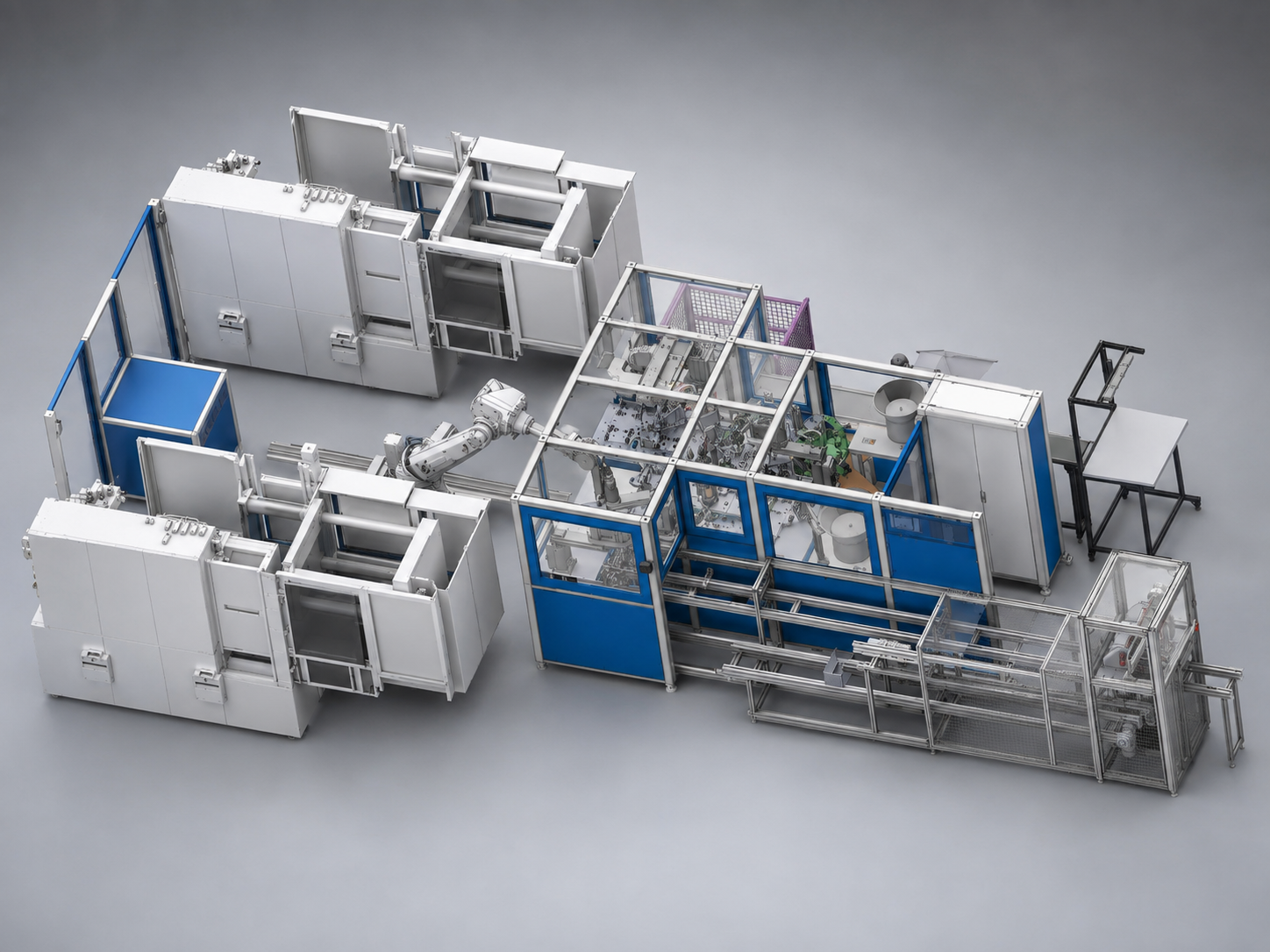
Next step
Let's look at your process
If you know where the process stalls, we can review together which solution makes the most sense for the next step.